Foaling Management
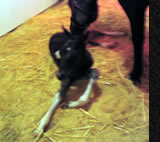
The birth of a foal is a highly anticipated event for many horse owners. Good management practices are essential to a successful breeding program. A live, healthy foal represents the investment of considerable time, money and effort. Management is especially important prior to the time the foal is weaned. The mare and foal should be on a regular worming, exercise, vaccination schedule along with an adequate nutritional program. It is also best to establish a relationship with a veterinarian who will be available for advice and/or emergency calls. Early management can impact future health throughout the foal's life. The gestation period of the individual mare may change from one year to the next. The "normal" length of gestation is 340 days; however this is an average, "normal "pregnancies range from 315 to 365 days.
PRE-PARTURATION FOAL PROTECTION
Approximately four to six weeks prior to the anticipated foaling date, the mare should be boosted with vaccines to provide high levels of antibodies in her colostrum (first milk). Consult your veterinarian for recommendations on which vaccines to administer, but as a minimum, the mare should be boosted with tetanus toxoid.
PREPARING THE STALL
The foaling stall should be prepared well in advance. It should be at least 12 by 14, clean, located in a quiet area of the barn and maintained at a comfortable temperature. The stall should be checked over very closely for protruding nails, splintering wood or anything else that could damage the newly born foal. Feed and water containers should be positioned in such a way that they cannot interfere with foaling or injure the newborn foal as it struggles to it's feet and learns to walk. Be sure to have the stall disinfected prior to the mare being introduced.
Before the mare is brought to the foaling stall, the floors and walls should be cleaned thoroughly. Remove any bedding and lime the floors, scrub the walls, feeder, water bucket and manger with soapy water using a wire brush. After the stall has dried it should be disinfected with povidone-iodine, pine oil or some other product recommended by your vet. Leave the stall open to dry for several days, then spread fresh bedding.
If possible the stall should contain foaling rails ( boards mounted to the inside of the stall about 10" off the wall and about 10" above the ground for the lowest ) to keep the mare off the wall and out of corners. Straw or shredded paper is the bedding of choice over wood chips or sawdust which can adhere to the wet newborn and may irritate the foal's eyes, mucous membranes or interfere with its respiration.
Many farm managers, owners and veterinarians prefer to foal on clean pasture where there is minimal exposure to infection, but to have the mare inside where she can be closely watched is often much easier. In a stall, assistance can be provided more readily when necessary.
During the last month of pregnancy the signs observed will help determine when to change feeding practices and when to move prepare foaling stall.
SIGNS OF APPROACHING FOALING
Mares may exhibit all or none of the following signs:- Musculature around the tail head becomes soft and flaccid 2 to 4 weeks before foaling.
- The genitalia relaxes
- The udder begins to fill during the same period.
- The mare may show signs of uneasiness during the last two weeks of gestation
- Waxing of the teats (sticky droplets on the ends of the teats) occurs 24 to 28 hours before parturition.
- Milky fluid may leak from the teats for hours or days before labor onset.
- Protrusion of "Milk Veins" along the lower side of the abdomen.
- Some mares, especially maiden mares, might not produce milk until after foaling.
- Tail or Hindquarters rubbing.
ONE WEEK BEFORE EXPECTED FOALING
Move the mare to a foaling stall and change the feed ration. It is recommended that the grain be reduce and a more bulky ration be fed. A mare should be switched to a ration which includes bran at least 1 week before foaling. One pound of oats and two pounds of bran morning and evening is recommended to decrease the likelihood of constipation before and after foaling. This ration will also discourage heavy milk flow, thereby decreasing the chance of scours in the foal and mastitis in the mare. After foaling, the grain can be increased gradually over a ten day period until a full grain ration is resumed.
FINAL PREPARATIONS
Keep the mare in the foaling stall. If possible, an experienced person should attend her. This attendant can be helpful if problems arise but must know his or her limitations and call a veterinarian without delay when problem signs appear. Please look at our list of commonly used items to have on hand at foaling. Wash the mare's the udder and genitalia with a mild soap. Wrap the tail and readjust wrap (remove and reapply) several times each day until foaling is complete.
THE THREE STAGES OF LABOR
STAGE 1 - During the first stage of labor which will last from 2 to 24 hours, the muscles of the pelvic girdle relax, allowing the bones to spread so the foal can be positioned toward the birth canal. Movement is often noticeable as the foal turns into position. The abdominal wall above the flank and behind the ribs becomes concave, and the tail head becomes more prominent. Uterine contractions cause nervousness, erratic eating, sweating, pacing, tail switching and frequent urination. Colic can also cause these signs, and it is possible for a mare to become colicky from constipation prior to foaling. If the colic signs become severe or the signs continue for hours, call a veterinarian.
STAGE 2 - The second stage of labor can last from a few to 30 minutes and include contractions and delivery. It is important to leave the mare alone at this point if birth is progressing normally. Disturbances may interrupt or prolong the birth process. The mare has very powerful uterine contractions, and when the unborn foal is positioned in the birth canal properly, delivery can occur in a relatively short period of time (10 to 15 minutes). Birth usually occurs shortly after the outer water bag ruptures.
If birth does not occur within a reasonable length of time (20 to 30 minutes) after strong contractions begin or shortly after the rupture of the water bag, malpositioning may be present, and a veterinarian should be notified. Presentation of the foal's front feet occurs first in a normal delivery, soles down, relatively close together, one slightly more advanced than the other to help reduce the circumference of the foal's shoulders and easing passage through the pelvis, the nose of the foal should be tucked between the extended forelegs near the knees.
Most mares position themselves on their sides, with their legs fully extended during the delivery of the foal; however, some insist on standing. Standing mares should be held to prevent excessive walking. If the mare delivers standing, someone should catch the foal and gently lower it to the ground to prevent injuring the newborn foal and to prevent the tearing of the umbilical opening in the abdominal wall and predispose the foal to a hernia. The urachus (tube leading to the urinary bladder) may also tear, causing urine leakage into the foals abdomen. If the mare lies down next to a wall or fence, make sure there is plenty of room for the foal's delivery, or cause the mare to rise and allow her to select another location not so close to an obstacle.
The mare will usually rest after the passage of the shoulders and again after the passage of the hips. Do not pull on a foal progressing slowly through the vagina. If birth progress stops for more than ten minutes in one spot, apply gentle traction times with the contractions. If the foal feels "locked in," rotate the body one way, then the other; this might allow the hips to slip through the pelvic opening of the mare. Call a veterinarian if this technique is not immediately successful. Walk the mare until the veterinarian arrives. Suspect malposition of the foal and call a veterinarian when:
- only one foot is present
- more than two feet are visible
- feet are upside down
- the nose does not appear
- the nose appears without the front feet.
As the foal emerges, the inner sac usually breaks. If the sac does not break, free the foal from the sac and wipe the nose and mouth. Foals not breathing well should be rubbed vigorously with a towel to stimulate breathing. Allow the foal to lie quietly behind the mare for 10 to 25 minutes until the pulsation's in the umbilical cord cease. This allows the foal to receive the blood remaining in the placenta still attached to the uterus. Then crush or cut the navel cord and separate it three inches from the body and dip in antiseptic to destroy bacteria, help dry up the stump, and prevent infections. Dip the stump again in a few hours. Some individuals also dip the feet (a possible portal of entry for bacteria). Caution should be used as a mare's disposition can change quickly from friendly to aggressive at this time due to maternal instinct.
STAGE 3 - The afterbirth is expelled during the final stage of labor with the aid of uterine contractions. This process usually occurs within three hours, with normal range from 10 minutes to 8 hours. The placenta should be tied in a knot that hangs above the mares hocks to prevent her from stepping on it and tearing it out prematurely. Premature pulling of the placenta can cause irreparable damage to the mare's reproductive tract and may cause part of the placenta to be retained.
Once the membranes are expelled, these contractions continue to decrease the size of the uterus. Colicky symptoms may also appear at this time which are caused by contractions of the uterine muscles. The placenta is expelled inside out. Membranes which are not expelled within four hours are considered retained. Do not pull on these retained membranes. Tie them near the mare's vulva to keep the mare from walking on them. A veterinarian should treat a mare with retained afterbirth to prevent possible uterine infection and founder (laminitis). Membranes which are passed should be saved in the plastic bag for the veterinarian to examine. Self examination can be performed, you can fill the placenta with water, any tears or missing parts may indicate the mare has retained a portion of the placenta. Retained placenta, even small pieces, could impair future breeding ability.
During this time, the mare will clean the foal which should be trying to stand. Foals not standing within the first 2 to 4 hours after birth may be weak or abnormal and may require special treatment. The mare should be "milked out" and the foal fed 4 to 8 ounces. This will stimulate most of the slow starters. The foal also needs first milk (colostrum) before 6 hours pass to help combat disease and to aid in eliminating fecal material which has built up in the intestinal tract.
"Milking out" a small amount of milk by hand will open and clean the teat ducts. Check the teats for soreness. Some mares will not accept their foal readily if their udder is inflamed. Once on his feet, the foal will generally find his way to the udder. Let the foal find the teat himself; to help him by forcing his head is futile. Maiden mares should be held during this first nursing in the event they become anxious and kick at the foal.
An enema to help the foal pass meconium (sticky feces in the rectum and colon) is a preventive step because retained meconium in the intestine can harden and become impacted, causing the foal to strain to defecate and flag his tail back and forth. A word of warning regarding the enema: lubricate the tip and gently place no more than 1 inches inside the anus and all care should be taken to prevent the perforation of the intestine. The foal usually passes pieces of yellow-yellow brown manure (meconium). If the foal fails to defecate, becomes constipated or colicky, call a veterinarian.
Soon after parturition a veterinarian should examine the mare and foal for abnormalities such as cleft palate, heart defects, cataracts and musculoskeletal disorders. At this time, the veterinarian can also vaccinate against tetanus and administer any appropriate antibiotics. He should also examine the mare for damage to the reproductive tract and palpate the udder to check for mastitis. The mare should receive a tetanus toxoid injection at this time. The placenta should be examined to make sure it is completely intact.
Good foaling management is an important aspect for optimum health and survivability of both the mare and the foal.